
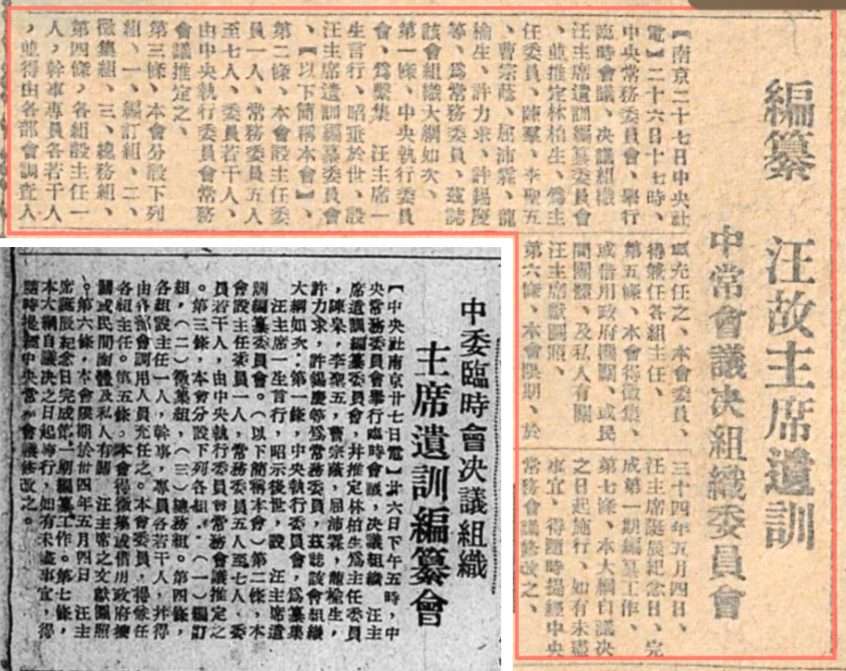
News reports on the 1944 formation of the Editorial Committee to publish Wang Jingwei’s writingsWang Jingwei’s collection of essays and speeches comprises the most prescient and well reasoned political discourse created in China in the last century. Crowds would stand and cheer during his speeches because of what he said. From his early 20s, when Wang Jingwei first published his … Read More
Life in Occupied Territories

Photo shows Nanjing streets with tea houses, broadcast station, train station, Xuanwu Lake, Confucius Temple, taken in 1941, a year after the Wang Jingwei Regime was established. (Shanghai Times, March 30, 1941.)What did Wang Jingwei aim to accomplish in establishing the Reorganized National Government (RNG)? How did the leaders of the regime view the mission, and how was it executed? … Read More
What Did Wang Jingwei Aim to Achieve with His Government?

Wang Jingwei declares the establishment of the Reorganized National Government in Nanjing on March 30, 1940 (Wikimedia Commons)To this day, Wang Jingwei’s breakaway from Chiang Kai-shek’s Nationalist government in Chongqing to form the Reorganized National Government (RNG) in Nanjing remains a heated topic. Academics and others around the world continue to debate the RNG’s success and failure; and most of … Read More
What Kind of Wang Jingwei Biography are We Looking for?
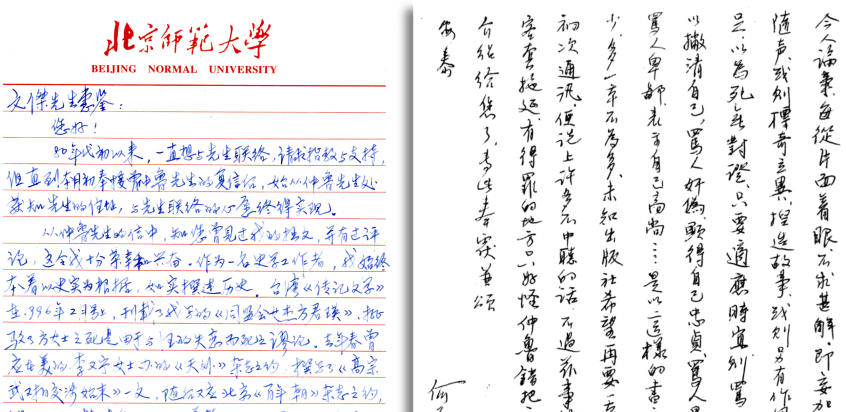
I am not clever, or qualified to discuss history; I just connect the historical material together for future generations.HO MANG HANGThis post aims to clarify the relationship between Ho Mang Hang and Cai Dejin, due to a false assertion that Ho helped Cai in the recent book Poetry, History, Memory: Wang Jingwei and China in Dark Times. We also wish … Read More
Chu Minyi (1884-1946)
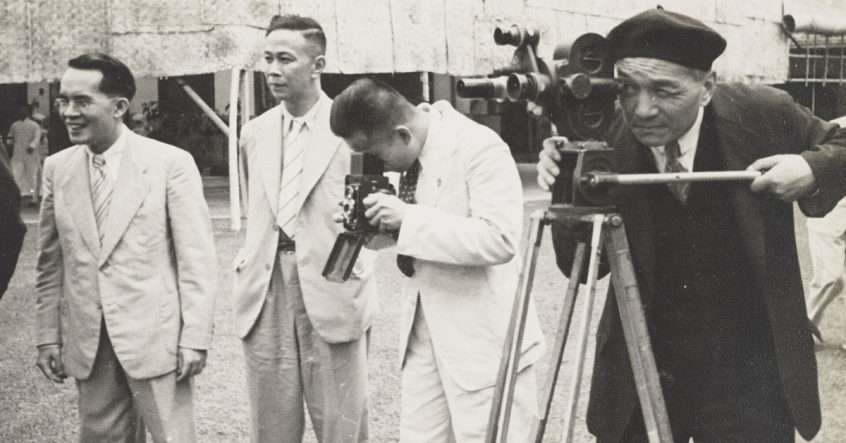
Chu Minyi using a movie camera. On the left is Lin Baisheng. (Wikimedia Commons)An early member of the Tongmenghui, Chu Minyi first met Wang Jingwei in 1911, after the Wuchang Uprising and Wang’s release from prison. The following year, Chu and Wang continued their acquaintance and became close associates in France, where Chu pursued his education and established the Institut Franco Chinois … Read More
Lin Baisheng (1902-1946)
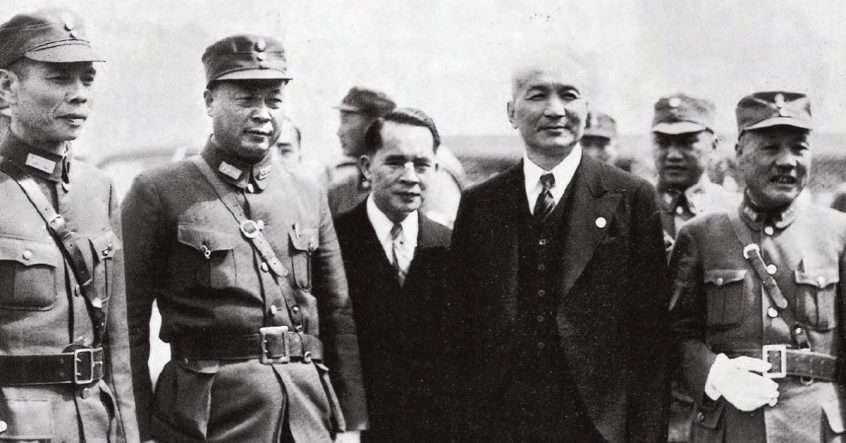
Lin Baisheng and Chu Minyi welcoming Wu Huawen to Nanjing in 1943. (Wikimedia Commons)A native of Xinyi, Guangdong, Lin Baisheng’s courtesy name was Shiquan. He studied at Lingnan University and the Moscow Sun Yat-sen University. After returning to China, he worked for Liao Zhongkai until Liao was assassinated, after which Lin became Wang Jingwei’s secretary. Later on, he managed propaganda … Read More
Zhou Fohai (1897-1948)
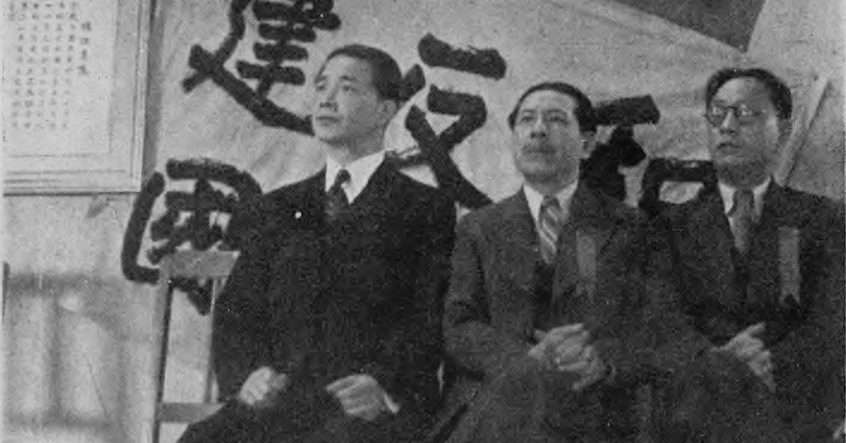
Zhou Fohai photographed with Wang Jingwei and Chen Gongbo. (Wikimedia Commons)A Chinese politician and second-in-command of Wang Jingwei’s Reorganized National Government (1940-1945), Zhou Fohai was a complex figure. Educated in Japan, credited as one of the founders of the Chinese Communist Party, Zhou quit the Communist Party in 1924 to join the Guomindang, maintained strong ties with the party’s leftist … Read More
Chen Gongbo (1892-1946)

Che Gongbo in Japan (Wikimedia Commons)A Chinese politician with an extensive resumé both in and outside of government, Chen Gongbo was a founding member of the Chinese Communist Party, and left the CCP to join the leftist faction of the Guomindang and became a close associate of Wang Jingwei and a vocal critic of Chiang Kai-shek from the mid-1920s onward. … Read More