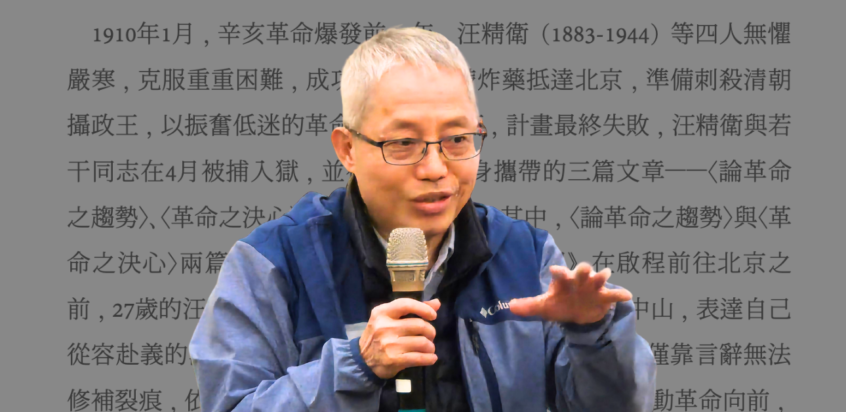
Professor Eugene Chiu of the Department of History at Tunghai University published his article “Towards the Path of a Martyr: The Political Thought of the Young Wang Jingwei” in Vol. 6, No. 2 of Comparative Studies of Greater China (2025), published by the Academy of Chinese Studies at Incheon National University in South Korea. Focusing on the development of Wang Jingwei’s thought before the age of thirty, the article retraces the formation of his early political ideas through three interrelated dimensions: revolutionary thought, the spirit of martyrdom, and Confucian thought.
Professor Chiu is concerned with not only which revolutionary activities the young Wang Jingwei took part in, but also with a deeper question: how did a young intellectual in the late Qing gradually develop the idea of the “martyr”—a person willing to put his political ideals into practice at the cost of his own life? The article re-examines Wang’s political writings from his years as a student in Japan, his articles in Minbao, and other political essays in order to trace how his revolutionary ideals, vision of the nation-state, and moral convictions became intertwined.
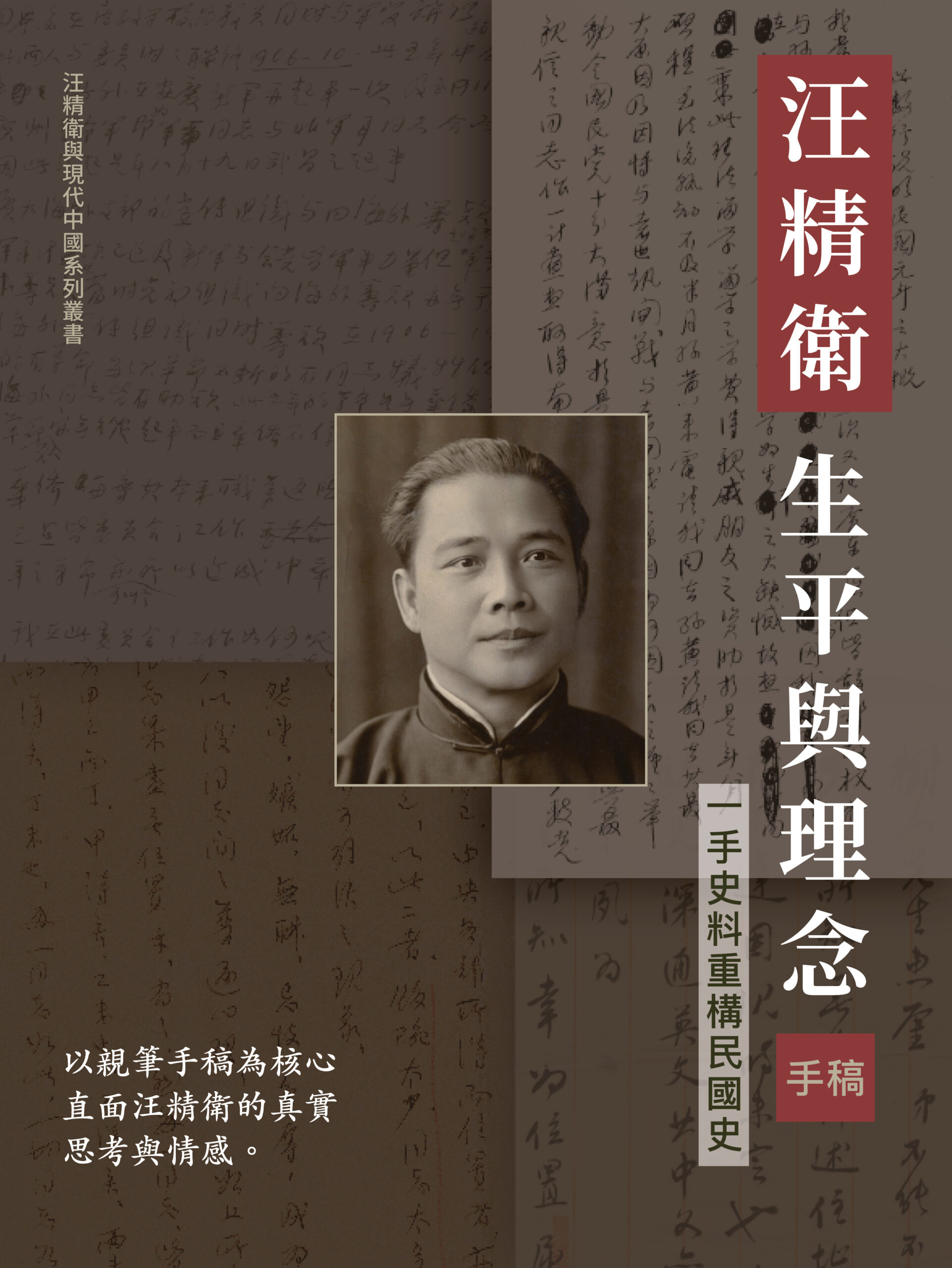
The political writings newly compiled and published in the Wang Jingwei and Modern China series provide important primary sources for this line of research. Professor Chiu closely examines Wang Jingwei’s poetry, correspondence, and early political writings, paying particular attention to texts such as “Determination for Revolution” included in the newly compiled and revised edition of Wang Jingwei’s Political Discourse: Selected Essays, Speeches, Letters and Telegrams.
In that essay, Wang wrote: “Who among us, in resolving upon revolution, was not moved by a heart of compassion?” From this, Professor Chiu argues that Wang’s revolutionary determination should not be understood simply as the youthful impetuosity of a passionate revolutionary, but as something closely connected to an internal moral imperative. The idea of the “martyr,” was not merely a historical image retrospectively imposed on Wang Jingwei, but a political and moral ideal that had already begun to take shape during his youth.
This perspective makes it possible to reconnect several strands that have often been examined separately: Wang Jingwei’s revolutionary theories during the Minbao period; the Confucian ideas of ren (benevolence or humaneness) and the “heart of compassion”; his understanding of action and sacrifice; and his later decision to attempt the assassination of the Prince Regent. These can all be examined as parts of a single, evolving intellectual trajectory.
This approach also demonstrates the importance of making primary sources newly available and systematically accessible. When researchers read Wang Jingwei’s early political writings, revolutionary arguments, and private texts in fuller form, their questions no longer remain confined within frameworks shaped by later historical judgments. Instead, they can ask where his political convictions originated, how different strands of Wang's thought interacted with one another, and how ideas formed during his youth influenced the choices he made later in life.
The firsthand material published in the Wang Jingwei and Modern China series do merely fill gaps in our historical understanding. They make it possible to ask questions that previously could not readily be formulated or investigated. Professor Chiu’s exploration of the formation of the young Wang Jingwei’s “spirit of martyrdom” represents another new direction of research opened up by these materials. To explore more of Professor Chiu’s research on the young Wang Jingwei, revolutionary thought, and modern Chinese intellectual history, visit the Eugene Chiu Lecture Series to watch and listen to his related lectures.
now available as individual e-books and in print