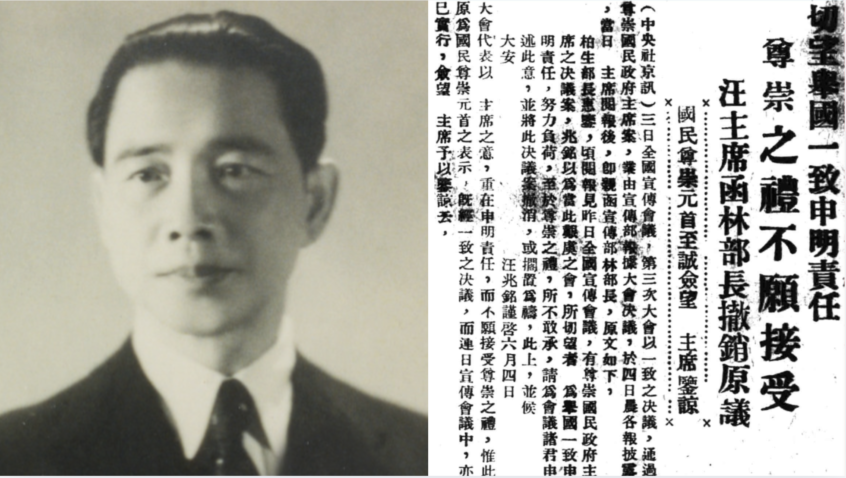
On November 10, 1944, Wang Jingwei passed away in Nagoya, Japan. Looking back on his life, historical records reveal his attitude toward personal tributes and public honors.
Three years earlier, on June 3, 1941, the National Propaganda Conference passed a resolution calling for special honors to be bestowed upon the Chairman of the National Government, Wang Jingwei. The following day, however, Wang wrote to Lin Baisheng, Minister of Propaganda, explicitly declining the proposal and requesting that the conference withdraw or set aside the resolution. The contents of his letter were subsequently published in the June 6, 1941 issue of Minbao.
Two years later, on May 4, 1943, Wang Jingwei turned sixty. His relatives and friends had planned to celebrate this milestone, but he once again declined. According to the expanded edition of Cloud, Smoke, Scattered Memories, the Memoir of Ho Mang Hang, written by his son-in-law Ho Mang Hang, Wang believed that birthday celebrations were inappropriate while the country remained at war and countless people were suffering. He therefore put a stop to all celebrations and declined every birthday gift except one.
From rejecting public honors in his political capacity to declining celebrations for his sixtieth birthday two years later, these seemingly unrelated incidents offer a glimpse into how Wang Jingwei regarded his own position, status, and the conventions of personal tribute. Without contemporary newspaper reports and the recollections of those who knew him, such details might have remained unknown to later generations.
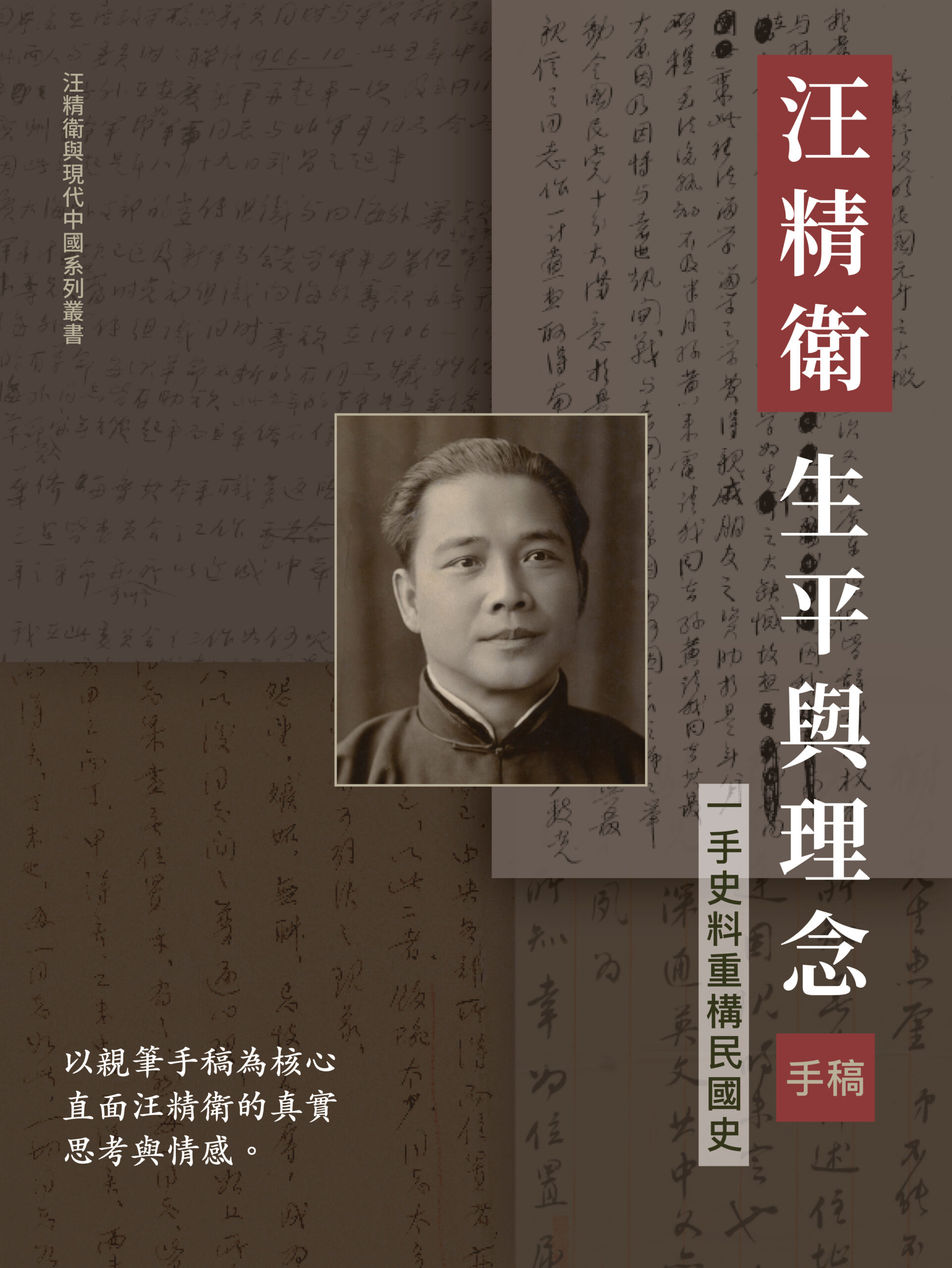
To understand an historical figure, we must look beyond public statements and examine private correspondence, everyday life, firsthand recollections, and other primary sources that illuminate the person's actions and beliefs. By continuing to compile and publish these valuable materials, the Wang Jingwei & Modern China series aims to bring readers closer to a fuller understanding of historical figures, encouraging them to explore overlooked details and form their own interpretations through firsthand evidence and independent reflection.
now available as individual e-books and in print