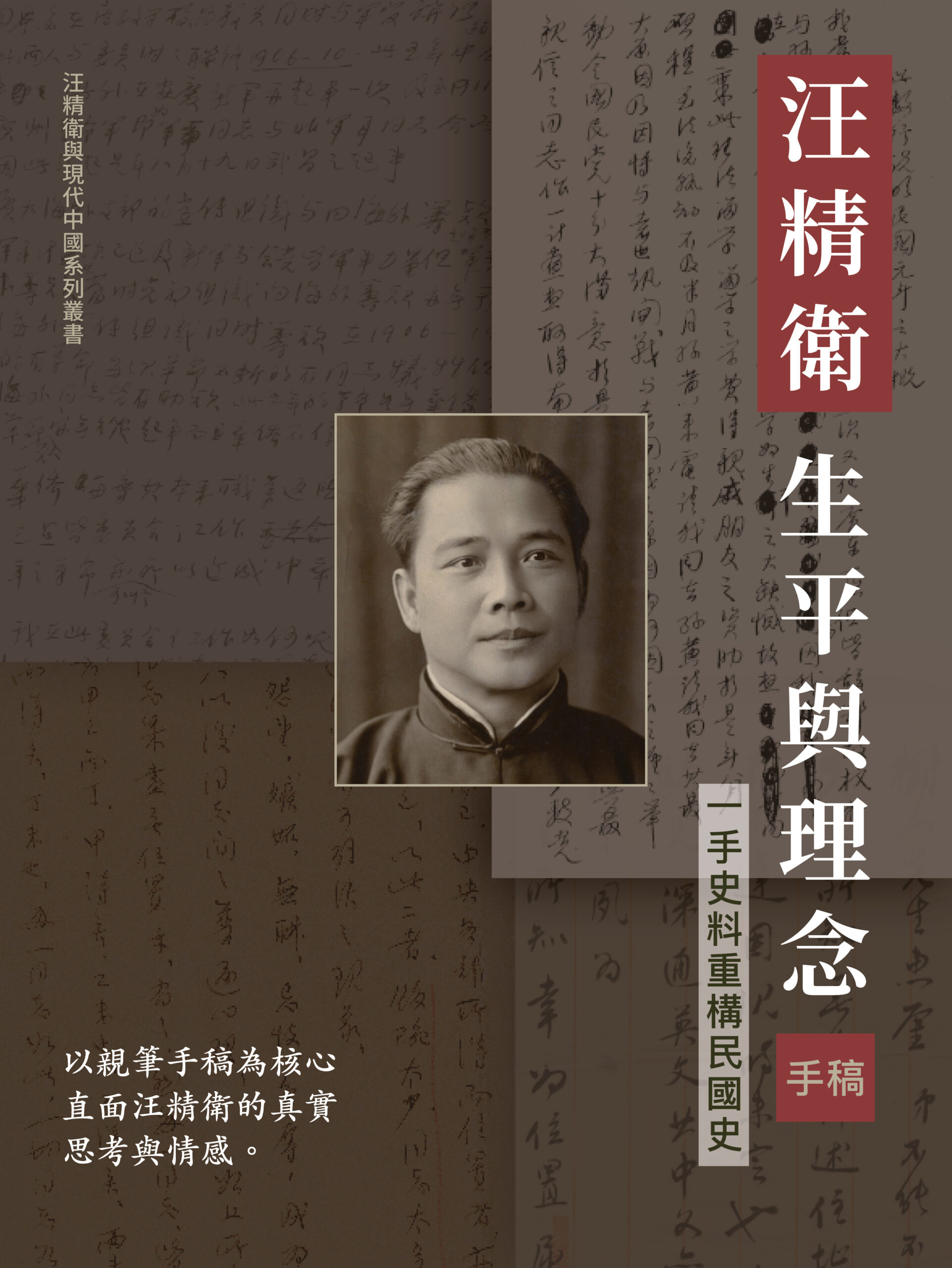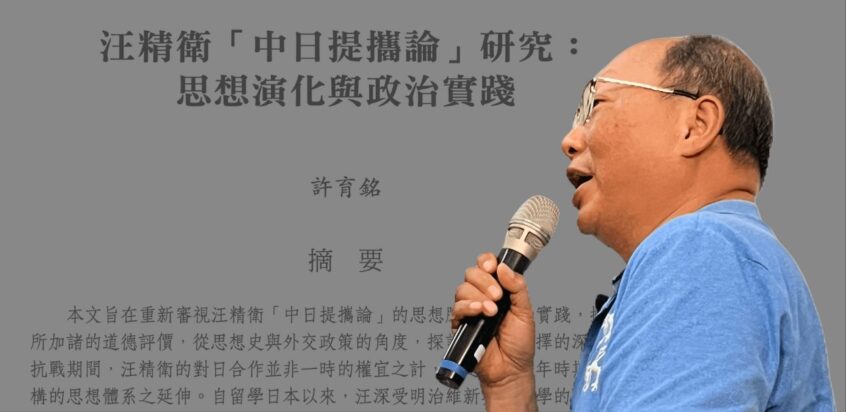
Hsu Yuming, Associate Professor in the Department of History at National Dong Hwa University, published his article “Wang Jingwei’s ‘Sino-Japanese Cooperation’ Theory: Intellectual Evolution and Political Practice” in Issue 86 of the Bulletin of Academia Historica in December 2025. The study re-examines Wang Jingwei’s policy toward Japan by tracing the development of his political thought over several decades.
The article argues that if Wang Jingwei’s cooperation with Japan is viewed only through the political outcome of the Second Sino-Japanese War, it can easily be interpreted as a temporary or expedient choice. Professor Hsu instead approaches the subject through intellectual history and foreign policy, tracing Wang’s thinking from his years as a student in Japan and his experience of the Paris Peace Conference, through his diplomatic activities in the 1930s, and finally to the wartime “Peace Movement.” From this longer perspective, the idea of “Sino-Japanese cooperation” did not emerge suddenly. Rather, it displayed a degree of continuity with Wang’s early revolutionary experiences, his theory of human coexistence, and his interpretation of Sun Yat-sen’s Pan-Asianism.
The study makes extensive use of Wang Jingwei’s articles, speeches, letters, and telegrams, allowing writings produced in different periods and scattered across newspapers, public addresses, and private correspondence to be read alongside one another. For example, Professor Hsu examines political writings such as Wang’s 1939 essay “One Example” together with his early revolutionary writings, diplomatic statements on Japan from the 1930s, and wartime speeches. Through these materials, he traces Wang’s repeated use of concepts such as “Sino-Japanese coexistence,” “cooperation,” “Pan-Asianism,” and the political legacy and teachings of Sun Yat-sen, while examining how these ideas gradually developed from personal political convictions into systems of policy and political propaganda. The version of “To Give an Example” cited in the article is drawn from the newly compiled and revised edition of Wang Jingwei’s Political Discourse: Selected Essays, Speeches, Letters and Telegrams.
This approach opens up an important new line of inquiry. Rather than asking only what Wang Jingwei ultimately did, it asks why he thought as he did, where these ideas came from, and how they were transformed under changing historical circumstances. The article concludes that Wang hoped to respond to China’s crisis of national survival through Sino-Japanese cooperation based on equality and reciprocity. In practice, however, this vision encountered a profound gulf between political ideals and the realities of Japanese militarism and war.
The availability of firsthand material through the Wang Jingwei and Modern China does more than add new historical details. It also makes it possible to raise and investigate questions that were previously difficult to formulate or substantiate, opening up new directions for research. To explore more of Professor Hsu’s research on Wang Jingwei, Republican-era politics, and modern Sino-Japanese relations, visit the Hsu Yuming Lecture Series to watch and listen to his related lectures.
now available as individual e-books and in print