I am not clever, or qualified to discuss history; I just connect the historical material together for future generations.HO MANG HANG
This post aims to clarify the relationship between Ho Mang Hang and Cai Dejin, due to a false assertion that Ho helped Cai in the recent book Poetry, History, Memory: Wang Jingwei and China in Dark Times. We also wish to take this opportunity to ask our readers to consider the “blindspot” in the study of Wang Jingwei and the occupied territories.
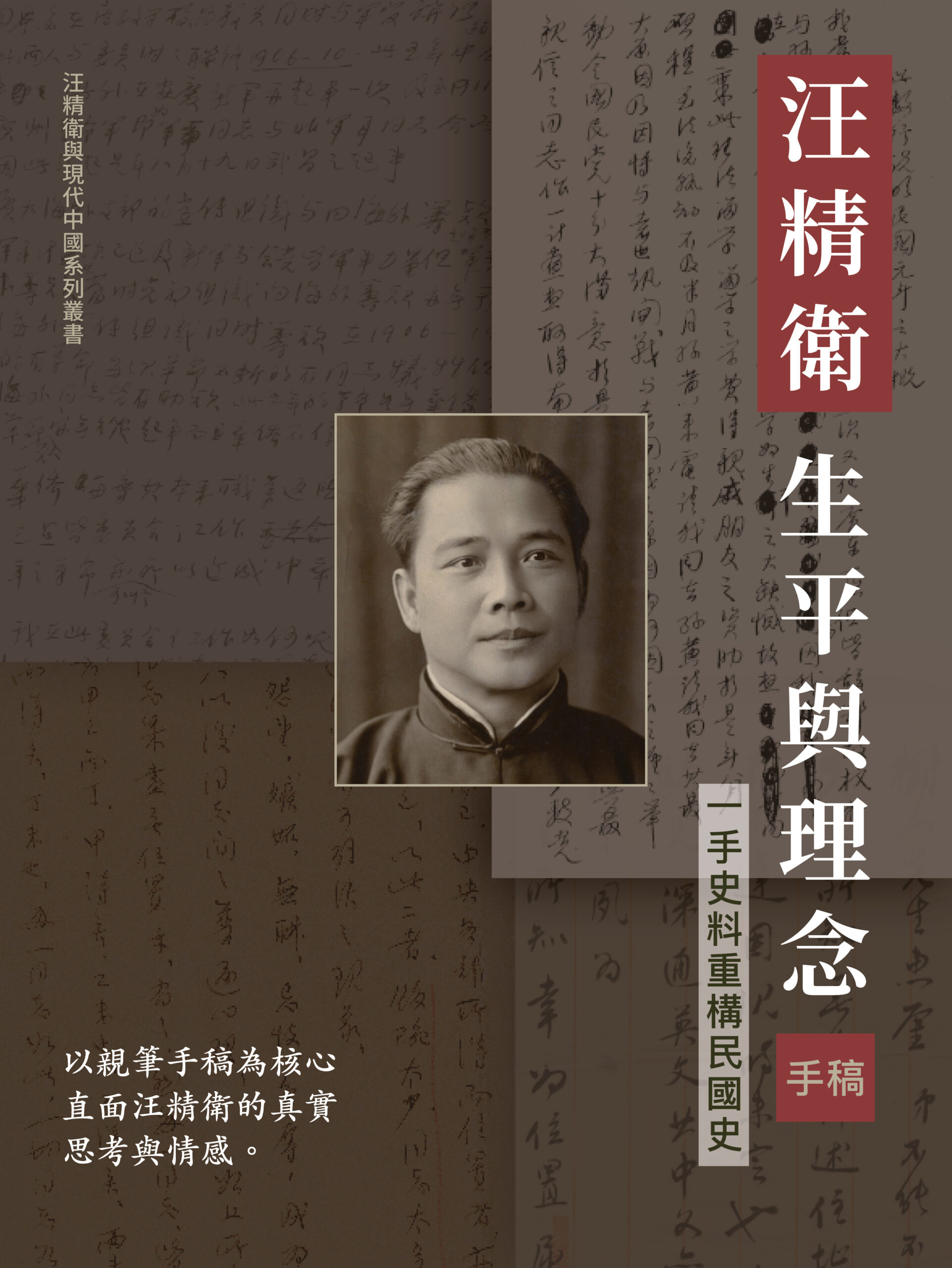
As Wang Jingwei’s son-in-law, Ho Mang Hang witnessed and participated in historical events as a Wang family member. He stayed close by Wang Jingwei’s side during Wang’s lifetime and later dedicated himself to gathering and organizing of primary source material related to Wang in order to assist serious researchers and scholars. For these reasons, various specialists in Wang studies contacted Ho Mang Hang to benefit from his insight and knowledge, which cannot be found in books. One such scholar was the Beijing Normal University historian Professor Cai Dejin (1935—1999).
Author of several books about Wang Jingwei and his associates, Cai Dejin was considered to be a renowned Chinese academic specializing in Wang. In a 1991 review of Cai’s 1987 book Wang Jingwei Pingzhuan (A Critical Biography of Wang Jingwei) the historian Wang Ke-wen acknowledges Cai’s work as the first Wang Jingwei biography by an academic in the Chinese language. Yet Wang Ke-wen considered the book’s use and mis-use of source material as indicative of bias. Nevertheless, Cai’s next book, the 1993 Wang Jingwei Shengping Jishi (Wang Jingwei Chronicles), based on newspapers and journals, remains one of the most cited resources among students of Wang Jingwei. The 1993 book was published at the time that Ho Mang Hang was working on “Wang Jingwei & Modern China,” which is included in Wang Jingwei: His Life, Ideas and Beliefs, and he found the Cai’s work useful.
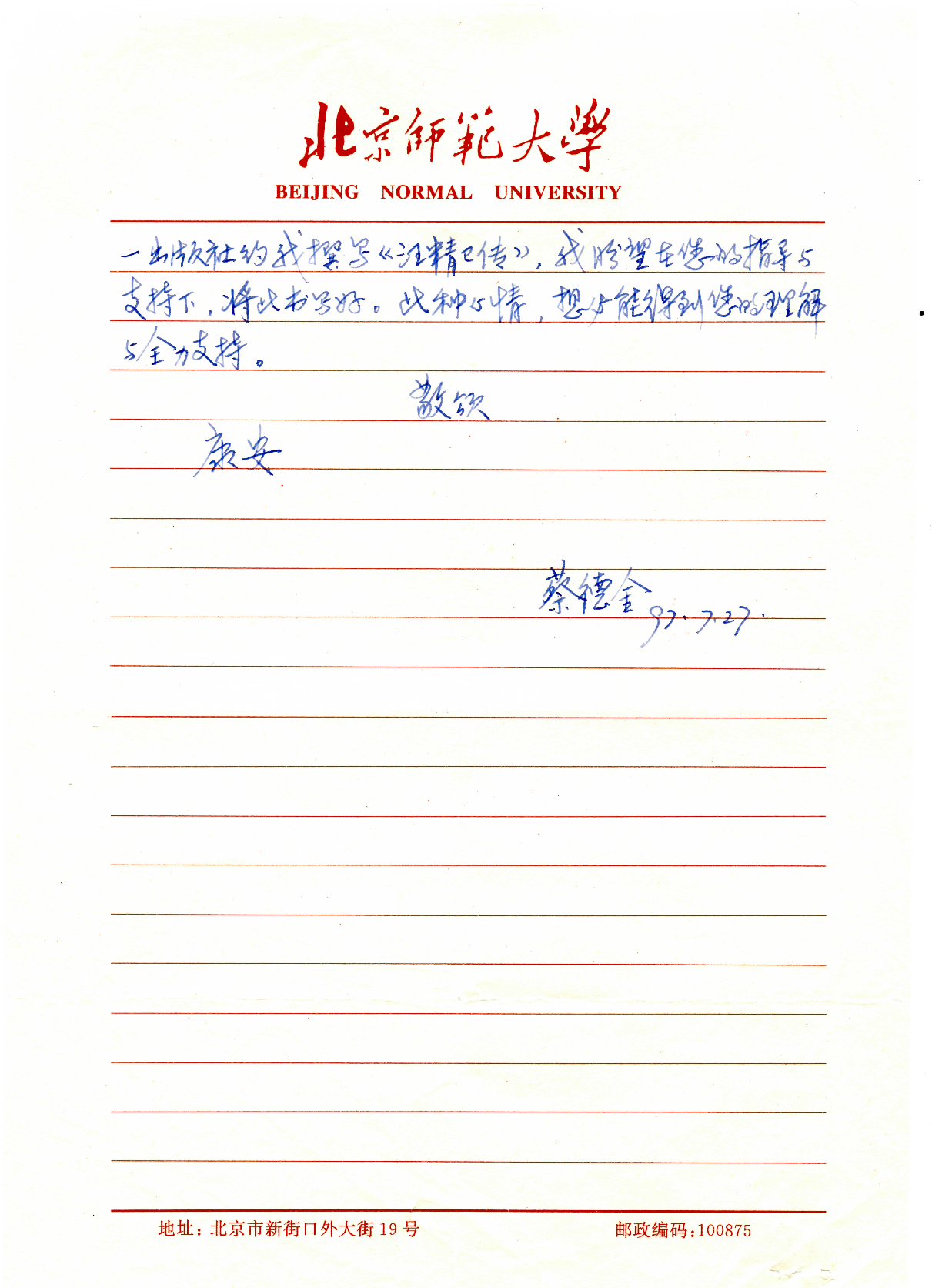
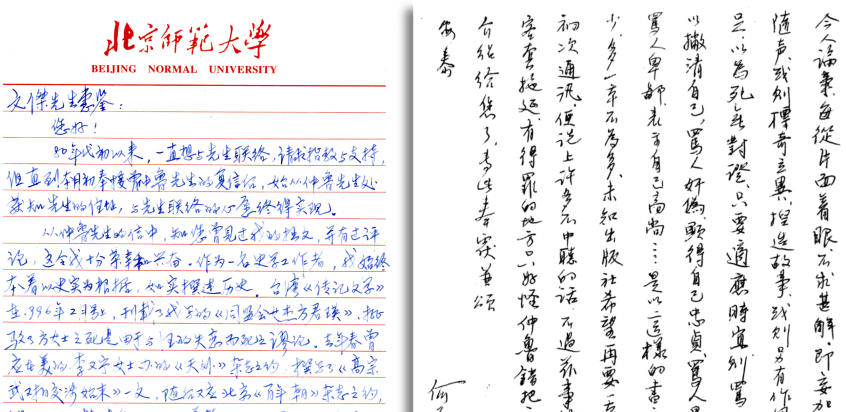
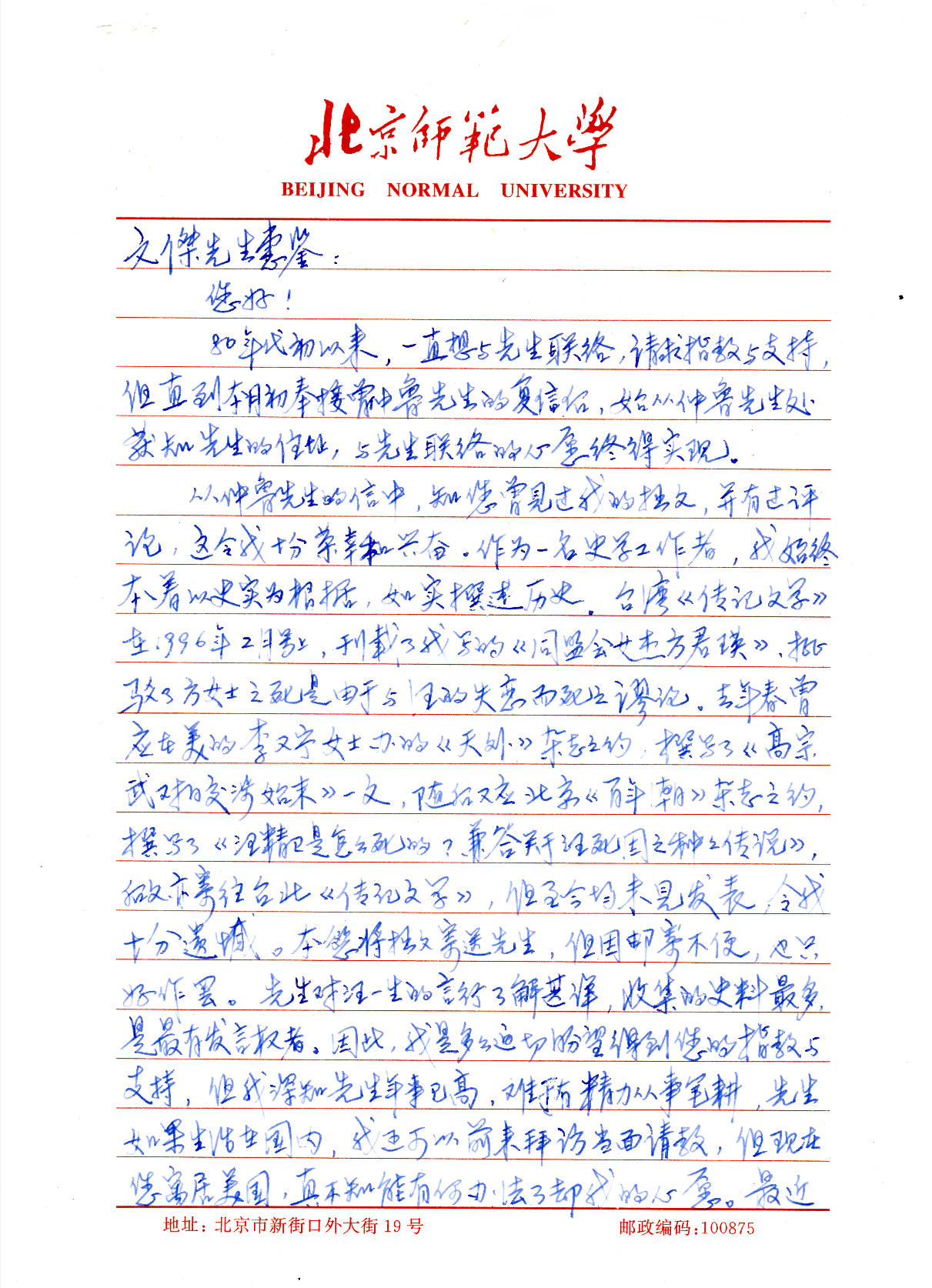
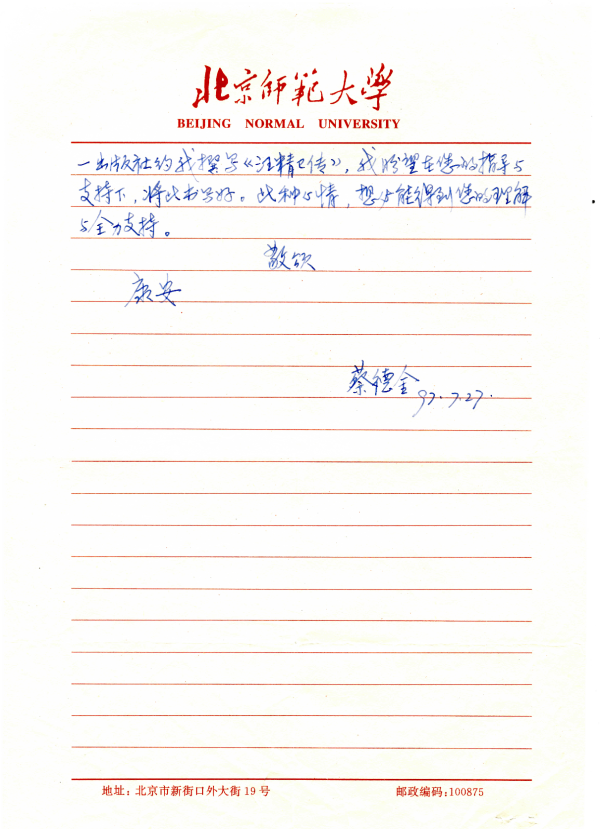
In a letter dated July 27 1997, Cai asked Ho Mang Hang for advice and support for a “another Wang Jingwei biography.” Cai Dejin corresponded with Ho Mang Hang via Tsen Chunglu (or Zeng Zhonglu), a son of Wang’s close associate Zeng Zhongming (1896-1939). In his response, Ho expressed his opinion of Cai’s work and questioned what Cai’s publisher had in mind, for yet another biography.
Cai Dejin’s letter illustrates the perceived value of a stamp of approval from a member of the Wang Jingwei family. Yet the value of Ho Mang Hang as an eye witness was apparently lost on Cai Dejin, because Ho “was living outside of China in the United States and because was too old.” (It should be noted that at the time of the correspondence, Ho Mang Hang was busy gathering and organizing material for what eventually became the foundation of the six-volume Wang Jingwei & Modern China series.)
Ho’s candid response to Cai, in a letter dated October 18, 1997, is an indictment of not only Cai’s work, but other similar publications that appear to be driven chiefly by political bias. Ho explains why he had problems with his books, citing specific examples and refers to Wang Jingwei’s own political writings, which can be found in the book Wang Jingwei’s Political Discourse.
Today, 27 years after this exchange between two individuals clearly interested in history, we echo Ho Mang Hang’s question and ask:
What kind of Wang Jingwei biography are we looking for today?
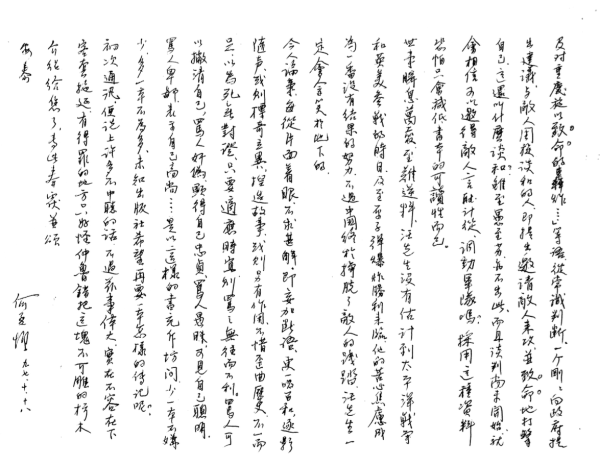
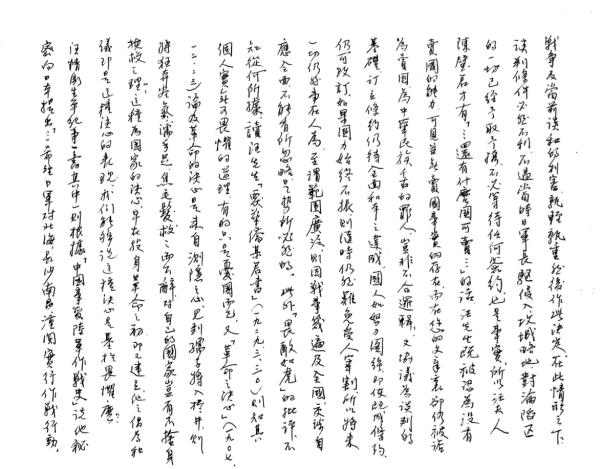
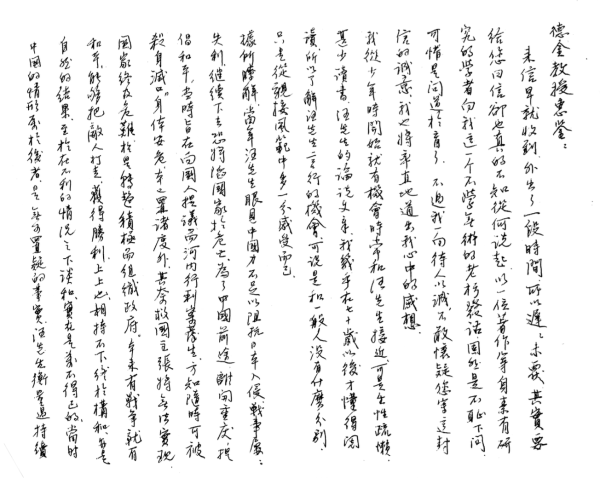
Dear Professor Dejin:
I received your letter a long time ago, but I was away for a while. This is why my response is so late. Actually, I really did not know how to begin. For a prolific writer and seasoned researcher to ask such an unlearned decrepit old man as myself is admirable, but it is like asking the way from a blind man. However, since I always treat people with sincerity, I do not question the sincerity of your letter. So I will speak directly.
I had been in frequent contact with Mr. Wang since I was young, but because I was lazy and did not study, I was in my 70s before I knew to read Mr. Wang’s political writings. As a result, my understanding of Wang’s words and deeds is not much different from others. What I have is what can only be gained through intimacy.
As I understand it, Mr. Wang saw that China was not in a position to fight against Japanese invasion. Time and again, China was losing, and if it continued, the entire country would be destroyed. For the sake of China’s future, Mr. Wang left Chongqing, with the goal of advocating for peace to the people of China. When the assassination of Hanoi took place, he realized he could be killed and silenced any time. Although he disregarded his own safety, if he should die, then his proposal for saving the country through peace would not be realized. In the end, the country would be in great danger; so he decided to organize another government in earnest.
Where there is war, there is also the opportunity for peace. Being able to defeat the enemy and win is the best case scenario, but when both parties are deadlocked, making a peace agreement becomes a natural outcome. Negotiating peace under unfavorable circumstances is really a last resort. At that time, China’s situation belongs to the latter. That is fact. After carefully weighing the pros and cons of continuing to fight versus negotiating peace, Mr. Wang came to this decision. Under such circumstances, the conditions for negotiation were inevitably unfavorable. At that time, the Japanese army had invaded, captured cities and territory, and everything in the occupied areas was theirs for the taking, without the need for any treaty. This is also indisputable. This is why Mrs. Wang Chen Bijun said “What country is there to sell?” Mr. Wang is considered incapable of treason, and evidence of treason does not exist. Yet, in your writings, you still criticize him as the traitor and sinner of the Chinese nation of all time. Where is the logic?
Moreover, agreement was the basis for negotiation, the establishment of a treaty still awaited the conclusion of comprehensive peace. If the people of the country worked hard to strengthen themselves, even if a treaty was established, it could still be revised. If the country’s strength remained weak, destruction would still be unavoidable any time. Everything in the future still depended on what people did. If the scope was too wide, it is because the war had already spread throughout the country, and negotiations needed to be comprehensive and broad. Given the circumstances, this was inevitable. As for the criticism of “fearing the enemy like one fears a tiger” I don't know where it comes from. Reading Mr. Wang’s “Response to an Overseas” (March 30, 1939), I know that he was not afraid for himself, he was only worried about the country.
“Determination for Revolution” (February 1, 1910) talks about the determination stemming from the heart of compassion. When you see a child about to fall into a well, you will run out of breath, your hands and feet will be soaked, and your hair will be burned, but you will not hesitate to save the child. When it comes to saving his own country, why would he not sacrifice his life? This determination for the country was established since the beginning of his participation in the Revolution. His advocacy of peace negotiations was a manifestation of this determination! Can we say that this determination is based on fear?
In Wang Jingwei Shengping Jishi, a “report” says that he secretly proposed to Japan and “…hoped that the Japanese army would start fighting against Beihai, Changsha, Nanchang, and Tongguan, and carry out fatal bombings on Chongqing.…” Using common sense, would a person who had just made a proposal to the government, and was negotiating peace with the enemy invite the enemy to attack himself? What kind of peace negotiation is this? No one is stupid and evil enough to do this. Besides, negotiations had not yet begun, Could the enemy be made to obey and mobilize the army? The use of such material would only reduce the book's readability.
The world is changing rapidly and was unpredictable. Mr. Wang could not estimate when the Pacific War and Britain and the United States would enter the war. When the atomic bomb and victory came, all of his painstaking efforts and worries became fruitless. However, when China finally broke free from the trampling of the enemy, Mr. Wang was definitely smiling in the hereafter.
Nowadays, people look at things from a one-sided perspective without asking for a deeper explanation. They make rash judgments, echoing each other. Or, they want to stand out, so they fabricate stories, or have other motivations to distort history without hesitation. They think that since the dead cannot defend themselves, as long as it suits their purpose, they will condemn to no end. Demonizing can be used to distance oneself, accusing someone for being a traitor shows one's loyalty. Scolding someone as ignorant makes one seem smart. Cursing someone as despicable makes one seem noble... This is why books like these are flooding the market. One less book is not too few, and one more book is not too many. What kind of biography does your publisher hope to publish?
I said a lot of unpleasant things in first communication. But matters of history are too important to be delayed because of politeness. If you have been offended, we can only blame Zhonglu for introducing to you this piece of wood that refuses to be carved.
I hereby offer my response and wish you peace good health,
Ho Mang Hang
October 18, 1997
單行本電子書與實體書現已陸續上架