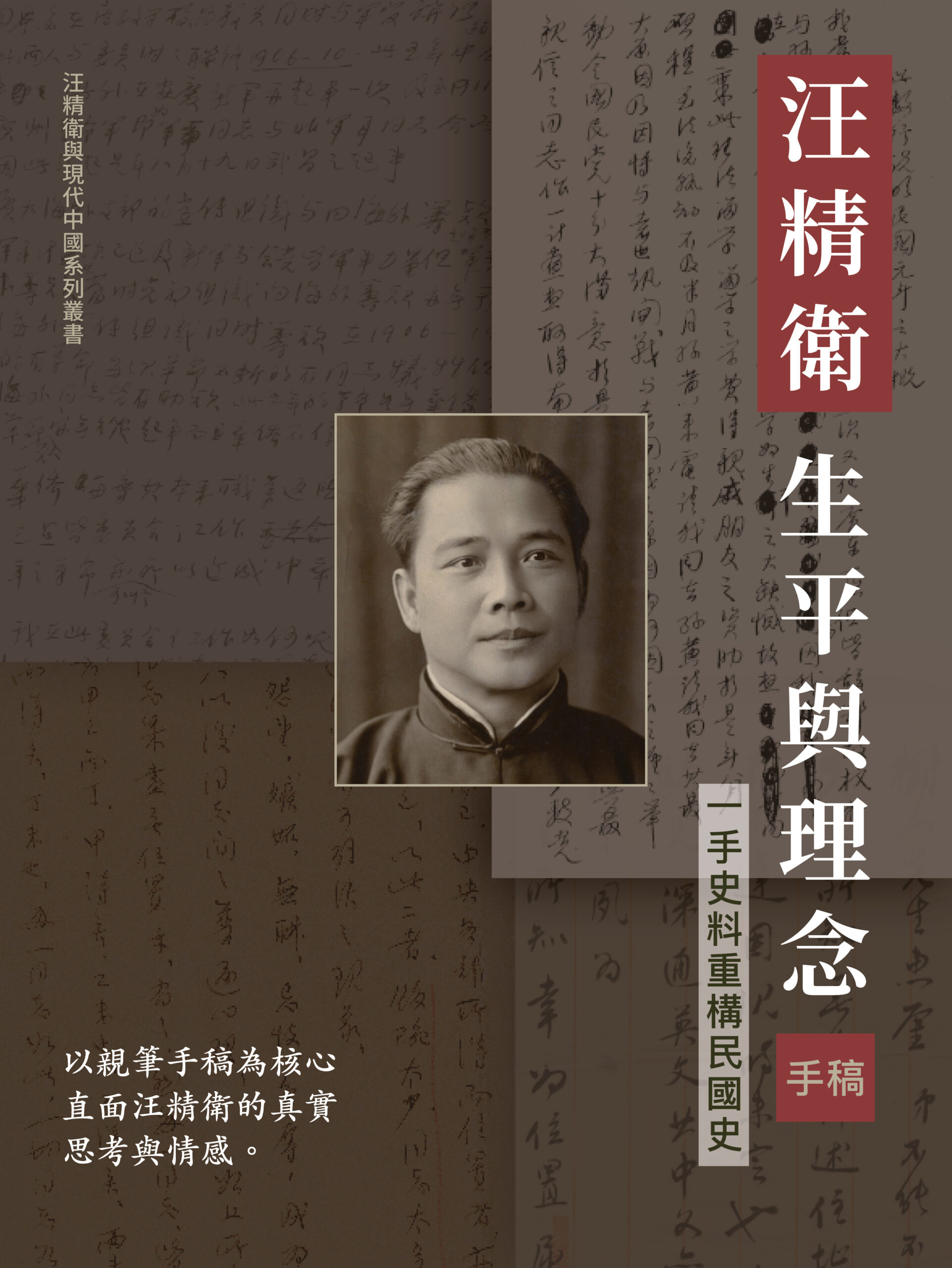
On March 29, 2025, The Wang Jingwei Irrevocable Trust hosted a seminar at Kishu An Forest of Literature in Taipei. Following the first episode where Professor Eugene Chiu explores Wang Jingwei’s thoughts during his youth, the second episode features a lecture by Professor Hsu Yuming, who has long specialized on Wang Jingwei research and wartime Sino-Japanese relations.
Professor Hsu authored the book Wang Zhaoming and the Nationalist Government: Political Changes under the Japan Issue from 1931 to 1936, as well as articles such as “A Study of Wang Jingwei’s Sino-Japanese Cooperation Theory: Ideological Evolution and Political Practice” and “The Wang Jingwei Regime and Japanese Advisors.”
The Wang Jingwei we know today is an image packaged by media, government, and historians layer by layer... Can we tell what is true from what is a concocted narrative?HSU YUMING
In this seminar, Professor Hsu focuses on how the Japanese truly understood Wang Jingwei and why they chose to collaborate with him. Professor Hsu points out that within wartime Japan’s military and political circles — particularly the “China experts” — they did not naively believe Wang Jingwei was a puppet who could be easily manipulated. Instead they had a considerable understanding of Chinese political culture and were acutely aware of what labels like “pro-Japanese faction” and “traitor” signified in Chinese society. For this reason, the Japanese did not view Wang Jingwei as “pro-Japanese,” but positioned him as a “Japan-knowing” figure:
There was a distinction between the “Japan-knowing faction” and the “pro-Japanese faction.” The Japan-knowing faction would not become pro-Japanese, but also would not reject Japan without reason, nor regard Japan as entirely uncooperative. It was rational. A major reason Japan collaborated with Wang Jingwei was that, in their view, Wang was a rational Japan-knowing figure within the Kuomintang.HSU YUMING
Professor Hsu emphasizes that the reason to understand Wang Jingwei is not to exonerate him but to acknowledge the dilemmas and limited choices faced by political figures during wartime, using primary source material. This year, the Trust will continue to host a series of seminars. We invite readers to subscribe to our newsletters to stay informed about upcoming talks and join rigorous scholars in re-examining political figures in modern Chinese history.
now available as individual e-books and in print